Kilimanjaro Packing List: The Complete Gear Guide for a Safe and Successful Summit
Packing correctly for your Kilimanjaro climb is one of the most important preparations you can make. The mountain presents an extraordinary range of conditions — from tropical heat and humidity in the rainforest at 1,800 meters to brutal wind chill and temperatures of -20°C or below on summit night at 5,895 meters. Every item on your packing list serves a purpose, and arriving on the mountain with inadequate gear is one of the most preventable causes of climber discomfort and failed summit attempts.
This comprehensive Kilimanjaro packing list has been developed by our experienced mountain team at Serengeti Wild Tours based on guiding thousands of climbers across all major routes. Use it as your definitive checklist. For the training advice that complements this gear guide, read our Kilimanjaro Training and Preparation Guide.
The Layering Principle: Why It Matters on Kilimanjaro
The single most important packing principle for Kilimanjaro is the layering system. You will experience a temperature range of approximately 40°C between the warm rainforest zone and the freezing summit. Adding and removing layers throughout each day is how you manage this range safely and comfortably.
A proper Kilimanjaro layering system has three components:
- Base layer (moisture-wicking): Pulls sweat away from your skin to keep you dry during active trekking.
- Mid layer (insulating): Traps warm air close to your body when you stop or when temperature drops.
- Outer layer (waterproof and windproof): Protects against rain, wind, and extreme cold.
Never use cotton as a base layer — it retains moisture and can lead to dangerous chilling when temperatures drop. Merino wool and synthetic moisture-wicking fabrics are the correct choices.
Essential Clothing: Upper Body
Base Layers (Upper)
- Moisture-wicking long-sleeve shirts (2–3): Merino wool or synthetic. Wear one, pack two spares. These are your primary trekking layers for days 1–5.
- Short-sleeve moisture-wicking t-shirts (2): For warm days in the lower forest and heath zones.
- Thermal base layer top (1): Heavyweight merino or synthetic thermal, worn only on summit night and cold high-altitude camps.
Mid Layers (Upper)
- Fleece jacket (1): Mid-weight fleece for cool evenings and morning starts. Worn daily from Shira Camp upward.
- Down or synthetic insulated jacket (1): Essential for high camps and summit night. A quality down jacket rated to -15°C is the most important single clothing item you can bring.
Outer Layer (Upper)
- Waterproof and windproof hardshell jacket (1): A fully seam-sealed jacket with a hood that fits over all your layers. Non-negotiable for summit night conditions.
Essential Clothing: Lower Body
Base Layers (Lower)
- Moisture-wicking hiking trousers (2 pairs): Convertible zip-off styles work well for adapting to temperature changes during the day. Avoid jeans or cotton trousers entirely.
- Thermal base layer leggings (1 pair): Worn under hiking trousers from approximately 3,500m upward and always on summit night.
- Lightweight trekking shorts (1 pair): Optional, for warm days in the rainforest and lower heath zones.
Outer Layer (Lower)
- Waterproof over-trousers (1 pair): Worn over hiking trousers in heavy rain and on summit night for wind protection.
Footwear and Accessories
Boots
- Waterproof ankle-support hiking boots (1 pair): This is the most critical gear investment you will make. Your boots must be waterproof, have excellent ankle support for rocky terrain, and — most importantly — be thoroughly broken in before you arrive. New boots on Kilimanjaro mean blisters, and blisters on summit night can force a turnaround. Wear your boots on all training hikes from the day you buy them.
- Lightweight camp shoes or sandals (1 pair): For wearing around camp in the evenings to rest your feet from the boots.
- Gaiters (1 pair): Recommended for keeping loose scree and mud out of your boots on the upper mountain.
Socks
- Merino wool or synthetic hiking socks (3–4 pairs): Heavy-cushion wool socks provide the best blister prevention. Change socks daily if possible.
- Liner socks (2–3 pairs): Thin liner socks worn inside hiking socks significantly reduce friction and blister risk.
Hand and Head Protection
- Warm fleece or wool hat / beanie (1): Worn from camp three upward and throughout summit night.
- Balaclava (1): Covers face and neck completely. Essential for summit night wind protection.
- Sun hat or cap (1): Critical sun protection on exposed highland and summit approaches.
- Neck gaiter or buff (1): Versatile — worn as a neck warmer, face covering, or dust mask.
- Warm insulated gloves (1 pair): For daily use from Shira Camp upward.
- Waterproof over-gloves or mittens (1 pair): Over your insulated gloves for summit night. Preventing frozen fingers is critical for safety.
- Chemical hand warmers (4–6 pairs): Small, disposable hand warmers placed inside gloves on summit night provide significant comfort and safety benefit.
Sleeping Gear
All routes except Marangu require camping, and our team provides dome tents and sleeping mats on all our Kilimanjaro Trekking Tours. You are responsible for your sleeping bag.
- Four-season sleeping bag rated to -10°C to -15°C (14°F to 5°F) (1): Do not underestimate this. High camps are extremely cold, and a sleeping bag that is too light will leave you shivering through the night before summit day — significantly impairing your summit performance.
- Sleeping bag liner (1): A fleece or silk liner adds 5–8°C of warmth and is lightweight and easy to pack. Strongly recommended.
Trekking Equipment
- Daypack (25–35 liters) (1): You carry your daypack yourself on every trekking day. It should hold your water, snacks, extra layer, camera, and personal items. Keep it light — aim for under 7 kg total when packed.
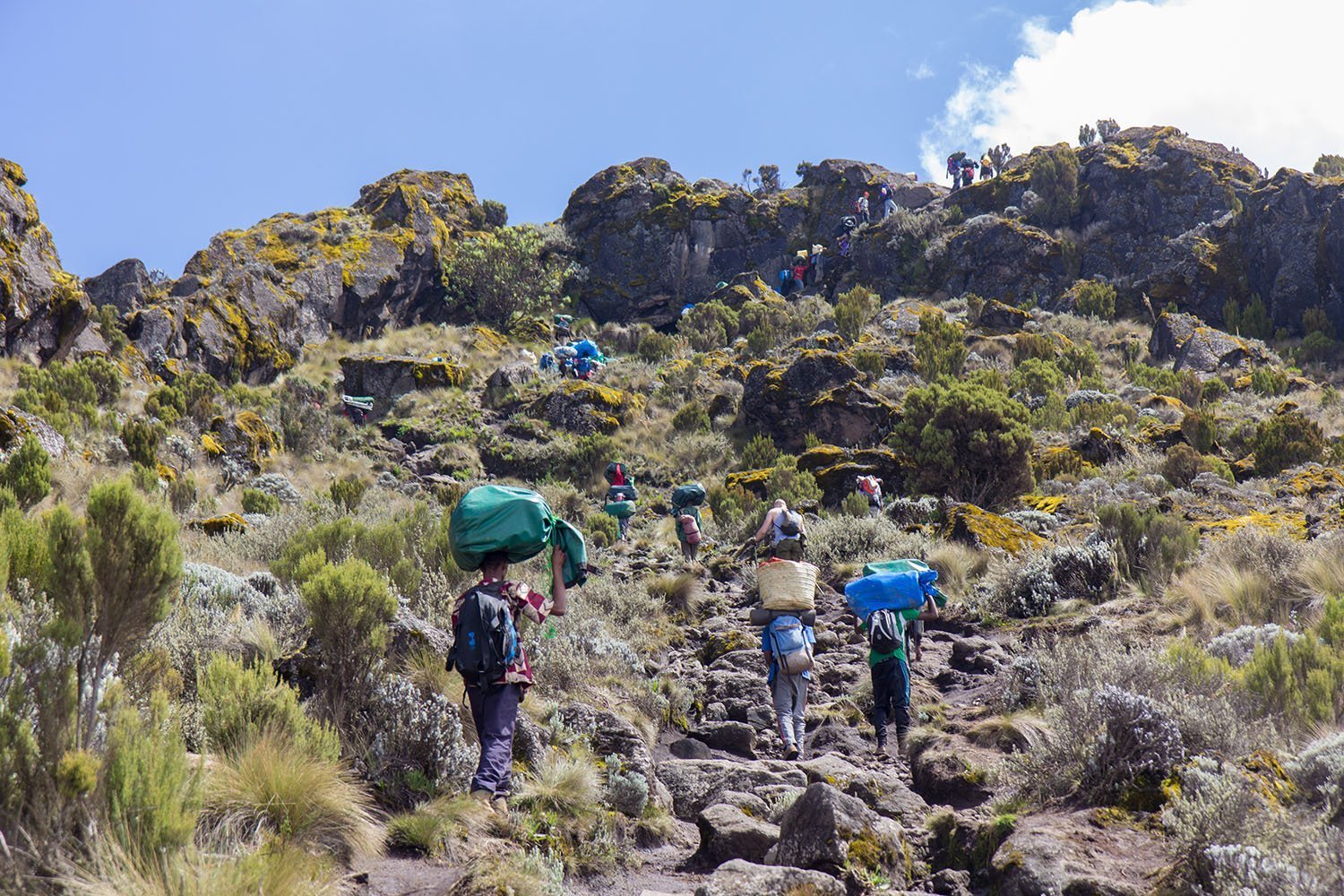
- Duffel bag for porters (max 15 kg) (1): All your camping gear and non-essential equipment goes in this bag, carried by our porters. Our maximum porter load is 15 kg — pack within this limit.
- Adjustable trekking poles (1 pair): Strongly recommended, especially for the descent. Trekking poles significantly reduce knee strain, improve balance on loose scree, and provide an additional safety margin on exposed sections. Bring collapsible poles that fit in your luggage.
- Headlamp with extra batteries (1): Your most critical summit night tool. A headlamp failure on summit night is a serious safety issue. Pack two sets of spare batteries and test your headlamp before you leave home.
- Water bottles or hydration system (3 liters total capacity): Hydration is the single most important altitude management strategy. You need to drink 3–4 liters per day on the mountain. Two 1.5-liter insulated bottles are ideal — wide-mouth bottles are easier to fill and less likely to freeze at altitude.
- Sunglasses with UV protection (1 pair): Essential above the treeline. The combination of high altitude UV radiation, glacier reflection, and dust make quality UV-protective sunglasses non-negotiable.
- Trekking umbrella (optional): Useful for rain protection during the lower altitude sections. Lightweight and packable.
Personal Health and First Aid
- Personal prescription medications: Bring adequate supply for the full trip plus a buffer of several extra days.
- Altitude sickness medication (Diamox / Acetazolamide): Consult your doctor 4–6 weeks before your climb to discuss whether Diamox is appropriate for you. Our Altitude Sickness Guide covers Diamox in detail.
- Pain relievers (ibuprofen and paracetamol): For headaches and muscle aches. Ibuprofen also helps with altitude headache.
- Anti-nausea medication: Altitude often causes nausea. Your doctor can prescribe anti-emetics for the summit push.
- Blister treatment (moleskin, blister pads, second-skin): Even with broken-in boots, blisters can form. Treat them immediately when they develop.
- Electrolyte powder or tablets: Add to water bottles to replace electrolytes lost through sweat and altitude diuresis. Significantly improves hydration effectiveness.
- Lip balm with SPF 30+: Lips crack and burn badly at altitude, particularly in dry conditions.
- Sunscreen SPF 50+: UV radiation increases significantly with altitude. Apply liberally on all exposed skin from the heath zone upward.
- Hand sanitizer: Camp washing facilities are basic. Hand hygiene prevents gastrointestinal illness on the mountain.
- Small personal first aid kit: Including adhesive bandages, antiseptic wipes, sterile gauze, medical tape, and scissors.
Toiletries and Hygiene
- Toothbrush and toothpaste (travel size)
- Quick-dry microfiber travel towel
- Wet wipes (for camp washing and hygiene)
- Toilet paper in a sealed zip bag (essential — camp facilities are basic)
- Small biodegradable soap
- Anti-chafing cream or petroleum jelly
Snacks and Personal Nutrition
Our Kilimanjaro camp cooks provide three meals per day on the mountain — breakfast, a hot lunch, and dinner — with fresh, nutritious food throughout. However, personal snacks are highly recommended for sustained energy on long trekking days and especially during summit night. Choose calorie-dense, quick-energy foods:
- Energy bars (Clif bars, Larabars, or equivalent) — 6–8 bars per person
- Trail mix or roasted nuts — 200–300g per person
- Dried fruit (dates, mango, apricots)
- Dark chocolate
- Energy gels (5–8 gels for summit day)
- Sweets or hard candy — surprising comfort at altitude
Documents and Money
- Passport (valid for 6 months beyond departure)
- Tanzania visa or e-Visa approval letter
- Yellow fever vaccination certificate
- Travel and medical insurance documents (including emergency evacuation coverage)
- Printed itinerary and emergency contact details
- USD cash for tips — budget USD 200–300 total for your guide, assistant guides, cooks, and porters (distributed at Mweka Gate on descent)
What to Carry in Your Daypack on Summit Night
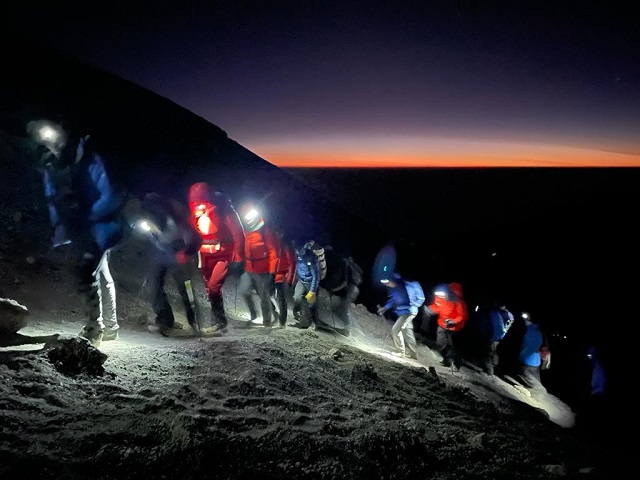
Summit night requires a specific daypack loadout. Before leaving Barafu Camp at midnight, ensure your daypack contains:
- Headlamp (checked and fully charged) plus spare batteries
- All your warm clothing layers (already wearing most of them)
- 2–3 liters of water (bottles wrapped in socks to prevent freezing)
- 2–3 energy gels and snacks
- Camera with extra battery kept warm inside your jacket
- Personal medications
- Hand warmers (already activated)
For a detailed account of what to expect on summit night hour by hour, read our Kilimanjaro Summit Night Guide.
What NOT to Bring on Kilimanjaro
- Hard-shell suitcases: Cannot be carried by porters. All luggage must be soft-sided duffel bags.
- Cotton clothing: Cotton retains moisture and provides no insulation when wet. Never use cotton as a base layer.
- Excessive electronics: Heavy laptops or large cameras (unless specifically for photography) add unnecessary weight.
- Excessive perfumes or strongly scented products: Can trigger nausea at altitude.
- New, unbroken boots: The single most damaging mistake. Break in your boots for at least 60–80 hours of walking before arriving in Tanzania.
Download the PDF Packing Checklist
A printable PDF version of this packing list is available for download. Download the Kilimanjaro Packing List PDF here.
Ready to Climb? Book with Serengeti Wild Tours
Our mountain team provides detailed pre-departure gear guidance to every client, including a personal consultation on any packing questions specific to your chosen route and time of year. Combine this packing list with our Training Guide, our Altitude Sickness Guide, and your chosen Kilimanjaro Route to arrive on the mountain fully prepared for the greatest trekking challenge of your life. Contact Serengeti Wild Tours today to begin planning your Kilimanjaro summit adventure.