Call Us
Choosing the right route is the single most important decision you will make when planning your Mount Kilimanjaro climb. The route determines your summit success rate, your acclimatization profile, the scenery you experience, the number of other climbers you encounter, and ultimately whether you reach Uhuru Peak at 5,895 meters — the roof of Africa.
There are seven established routes on Kilimanjaro, each with a distinct character, difficulty level, and success rate. At Serengeti Wild Tours, our Kilimanjaro Trekking Tours cover all major routes, and our experienced mountain team has guided thousands of climbers to the summit. This guide gives you the honest, detailed comparison you need to choose the right route for your goals.
Before comparing routes, it helps to understand what factors determine route quality. The most important considerations are:
The Machame Route is the most popular route on Kilimanjaro and consistently delivers some of the highest summit success rates of any route. Known as the "Whiskey Route" for its challenging terrain (in contrast to the easier "Coca Cola" Marangu Route), Machame attracts experienced trekkers who want scenic variety, good acclimatization, and genuine mountain adventure.
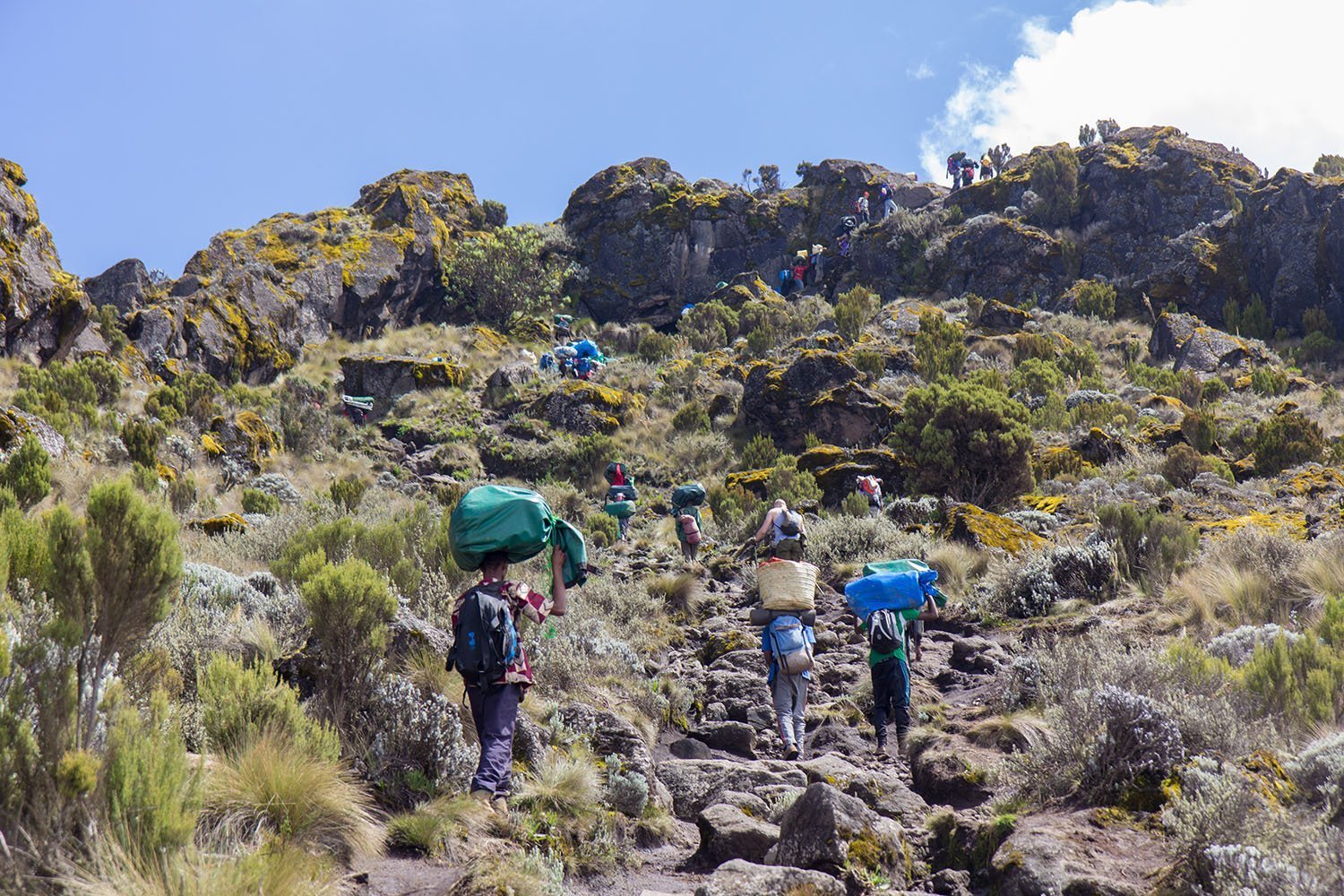
The Machame Route passes through extraordinary ecological diversity — dense montane rainforest on day one, the spectacular Shira Plateau on day two, the dramatic Lava Tower acclimatization day, and the thrilling Barranco Wall scramble before the final summit push from Barafu Camp. The route offers some of Kilimanjaro's finest scenery and its "climb high, sleep low" design delivers excellent acclimatization.
The main drawback is crowd levels — Machame is the busiest route on the mountain, and several routes merge onto it from day three onward. If you value solitude, consider the Lemosho Route instead. For full details and a day-by-day breakdown, read our dedicated Machame Route Guide.
The Lemosho Route is widely regarded by experienced guides and seasoned Kilimanjaro climbers as the finest route on the mountain. It combines the highest summit success rates, the most pristine wilderness, the best acclimatization profile, and the most complete traverse of Kilimanjaro's extraordinary landscapes.
The Lemosho Route begins at the remote Londorossi Gate on the western side of the mountain — far from the busier southern gates — with an armed ranger escort through wildlife habitat inhabited by elephant and buffalo. The route traverses the full width of the Shira Plateau before joining the Machame Route at Barranco Camp, providing the longest and most gradual approach and exceptional acclimatization. For a complete day-by-day breakdown, read our Lemosho Route Guide.
Our recommendation: if you can spare 8 days, the Lemosho Route is the best Kilimanjaro experience available. It is our top recommendation for most climbers booking Kilimanjaro Trekking Tours with us.
The Marangu Route is the oldest established Kilimanjaro route and the only one that uses permanent hut accommodation instead of tents. Often called the "Coca Cola Route" due to its reputation as the easiest path to the summit, Marangu is a common choice for budget-conscious climbers — but its reputation for ease is somewhat misleading.
Marangu's main appeal is its hut accommodation — avoiding the need for camping gear — and its lower starting price due to the shorter standard duration. However, the 5-day Marangu Route has the lowest summit success rate of all major Kilimanjaro routes, primarily because of insufficient acclimatization time. If you choose Marangu, we strongly recommend the 6-day option and budget for the extra night.
Marangu also ascends and descends via the same route, which lacks the scenic variety of circuit routes like Machame and Lemosho.
The Rongai Route approaches Kilimanjaro from the north — the only major route that does so — beginning near the Kenyan border and ascending through the remote, arid northern slopes of the mountain. Known informally as the "Fanta Route," Rongai is one of Tanzania's least-visited Kilimanjaro routes, offering genuine solitude and a completely different perspective on the mountain.
Rongai is ideal for climbers who value solitude and a different perspective on Kilimanjaro. The northern approach is drier and more open than the southern routes, with dramatic views of Mawenzi Peak — Kilimanjaro's secondary summit. The main consideration is the long drive from Moshi to the Rongai Gate (approximately 3.5 hours), which adds travel time at the start of the trek.
The Umbwe Route is the most direct and most challenging of all Kilimanjaro trekking routes. It gains altitude far faster than any other route, making it suitable only for very fit, experienced high-altitude trekkers who have previously climbed at altitude.
Umbwe is for experienced, fit trekkers who have successfully climbed at altitude before and want the most dramatic, least-crowded Kilimanjaro experience. The very steep ascent significantly limits acclimatization time, and we only recommend Umbwe to climbers with prior high-altitude experience. For most climbers, Machame or Lemosho deliver a better combination of success rate and scenic experience.
The Northern Circuit is the longest Kilimanjaro route and the one with the highest summit success rate. It combines the Lemosho Route's western approach with a full traverse of Kilimanjaro's remote northern slopes — the least-visited terrain on the entire mountain — before joining the southern approach for the summit.
If you have the time and budget, the Northern Circuit is the definitive Kilimanjaro experience — the longest, most panoramic, most remote, and most successful route on the mountain. The nine-day duration allows generous acclimatization, and the traverse of the northern slopes provides extraordinary views and genuine wilderness solitude. For physically active travelers prioritizing summit success above all other considerations, the Northern Circuit is our top recommendation.
The Mweka Route is used exclusively as a descent route for climbers who have summited via the western circuit routes (Machame, Lemosho, Umbwe, Northern Circuit). It descends steeply through rainforest to Mweka Gate, where official summit certificates are presented. Mweka cannot be used as an ascent route.
Here is a quick reference comparison of all routes:
This is the most common question our mountain team receives — and the answer is always: as many as you can afford. Every additional day on the mountain meaningfully improves your acclimatization and your summit success rate. Our data from thousands of Kilimanjaro climbs confirms that climbers on 7–8 day routes summit at significantly higher rates than those on 5–6 day routes.
For a detailed analysis of summit success rates by route and duration, read our Kilimanjaro Summit Success Rate Guide.
Once you have chosen your route, preparation is the next critical step. Our Kilimanjaro Training and Preparation Guide covers everything you need to know about fitness training, altitude acclimatization, and mental preparation. Our complete Kilimanjaro Packing List ensures you arrive on the mountain with exactly the right gear for every condition you will face.
For an understanding of the most significant challenge you will face — altitude — read our Kilimanjaro Altitude Sickness Guide before you book.
Our mountain team has guided climbers on every Kilimanjaro route and brings unmatched local expertise to your summit attempt. We offer fully supported climbs with experienced certified guides, dedicated cooks and porters, quality camping equipment, emergency oxygen, and pulse oximetry monitoring at every camp. Contact us today to choose your route and begin planning your Kilimanjaro adventure. The roof of Africa is waiting.
Let us help you plan a safari or climb that feels effortless, authentic, and unforgettable.
Call Us
Email Us
Copyright © Serengeti Wild Tours | All Rights Reserved
