Call Us
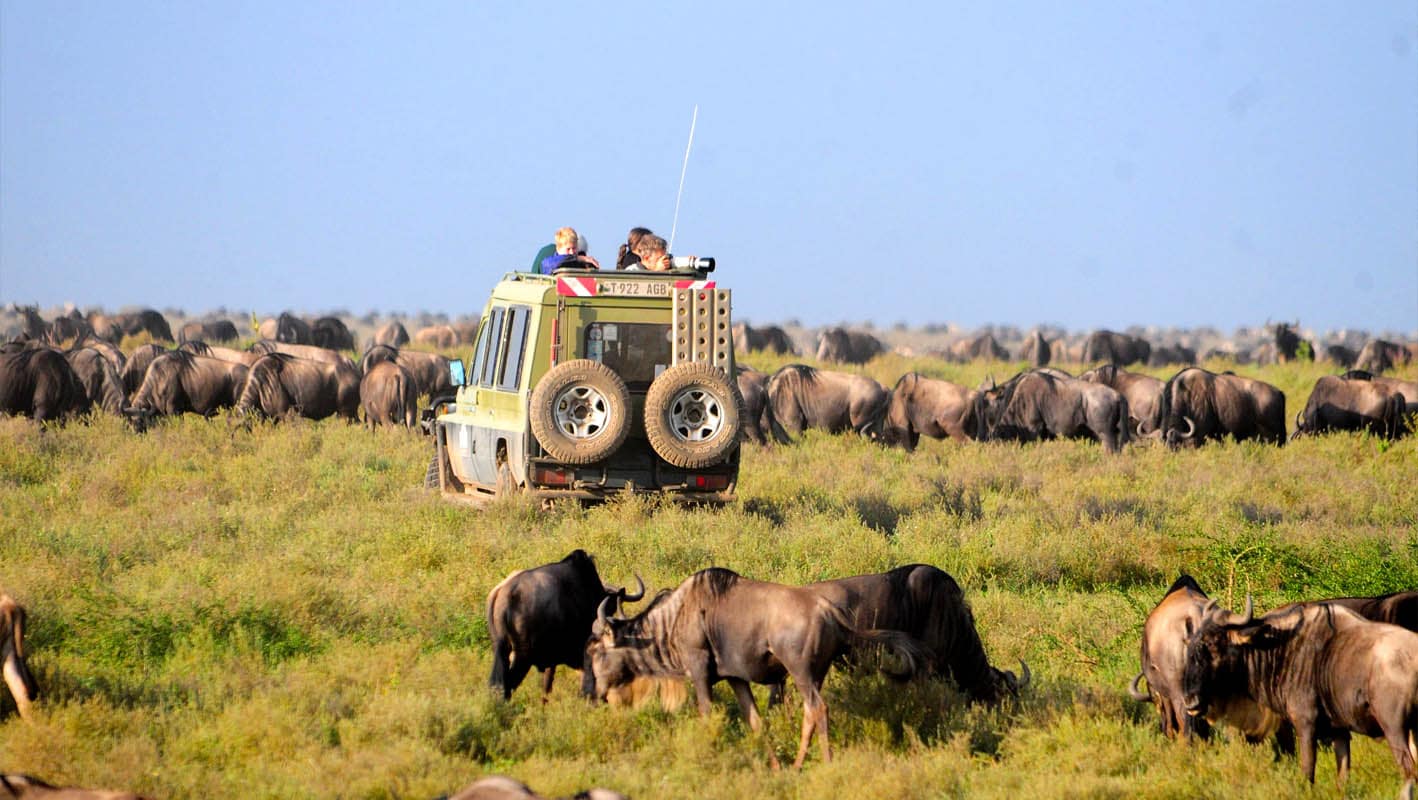
The Mara River crossing is the most dramatic wildlife spectacle on Earth. Every year, between July and October, hundreds of thousands of wildebeest and zebras gather on the banks of the Mara River in the Northern Serengeti and throw themselves into the crocodile-filled waters in a desperate, thundering bid to reach fresher grazing on the opposite bank.
For anyone who has witnessed a Mara River crossing, it is an unforgettable experience — primal, chaotic, heartbreaking, and exhilarating all at once. At Serengeti Wild Tours, our private Great Migration Safari is designed to put you in exactly the right place at exactly the right moment. This guide tells you everything you need to know.
The Great Wildebeest Migration is the largest overland animal migration on Earth, involving over two million wildebeest, zebras, and gazelles moving in a continuous loop across the Serengeti–Mara ecosystem. Driven entirely by rainfall and the availability of fresh grass, the migration follows no fixed schedule — it is a dynamic, living phenomenon guided by nature's cues rather than a calendar.
The Mara River crossings represent just one dramatic chapter in this year-round story. Understanding the full migration cycle helps you choose the right time and location for the type of experience you want. Our guide to the Great Migration Experience provides a deeper overview of the full annual cycle.
Mara River crossings generally occur between July and October, with August and September typically offering the most frequent and spectacular crossing events. However, the exact timing varies year to year depending on rainfall patterns and grass availability.
Here is an approximate timeline of major crossing activity:
The primary crossing sites are located in the Northern Serengeti, in an area known as the Lamai Wedge and along the Mara River between the Serengeti National Park boundary and the Kenyan border. Key crossing points include:
Our local guides track river crossing activity in real time via their networks across the Northern Serengeti. For a private and exclusive experience at the best crossing points, our Private Great Migration Safari offers dedicated guide attention and flexible scheduling to wait at the most active crossing points.
A Mara River crossing is a complex behavioral event that can take minutes or hours to unfold. Here is what typically happens:
A Northern Serengeti migration safari combines perfectly with other Tanzania experiences. Many guests add a Balloon Safari for a spectacular aerial perspective on the migration herds. Others extend their journey with a Ngorongoro Crater game drive or a Zanzibar beach extension. Our team can design a complete Tanzania itinerary around the migration, incorporating your preferred experiences and accommodation style.
Witnessing a Mara River crossing is a once-in-a-lifetime experience — but it requires expert local knowledge, flexible scheduling, and the right positioning to make it happen. Contact Serengeti Wild Tours today to start planning your private Great Migration Safari and secure your place at the greatest wildlife show on Earth.
Let us help you plan a safari or climb that feels effortless, authentic, and unforgettable.
Call Us
Email Us
Copyright © Serengeti Wild Tours | All Rights Reserved
