Call Us

Tanzania is one of the world's greatest birdwatching destinations, home to over 1,100 bird species — approximately 10% of all bird species on Earth. From the dramatic Kori bustard stalking the Serengeti plains to the iridescent sunbirds of Kilimanjaro's forests, and from the flamingo-pink shores of Lake Manyara to the Indian Ocean seabirds of Zanzibar, Tanzania's avian diversity is extraordinary and endlessly rewarding.
This guide covers Tanzania's best birdwatching locations, key species to look for, and how to incorporate birdwatching into your Tanzania safari with Serengeti Wild Tours.
Tanzania's extraordinary bird diversity is a product of its habitat diversity. The country encompasses tropical rainforest, alpine moorland, savannah grassland, freshwater lakes, alkaline soda lakes, coastal mangroves, coral reefs, and everything in between. Each habitat supports a distinct bird community, and a single Tanzania safari can introduce you to hundreds of species across multiple ecological zones.
Tanzania is also home to a significant number of endemic and near-endemic species — birds found only in Tanzania or in a very limited range. The Usambara Mountains, Uluguru Mountains, and Udzungwa Mountains are global hotspots for endemic species, attracting dedicated birders from around the world.
Lake Manyara is widely considered Tanzania's single best birdwatching destination. Its alkaline lake, groundwater forest, open floodplains, and acacia woodland support over 400 species including the pink flamingo concentrations, African fish eagle, saddle-billed stork, goliath heron, pelicans, and an extraordinary diversity of sunbirds, weavers, and raptors. Read our complete Lake Manyara guide for more details.
Tarangire records over 550 bird species and is famous for its massive red-and-yellow barbet colonies, yellow-collared lovebirds, superb starlings, and spectacular Kori bustards. The Tarangire River riparian zone supports a distinct bird community that makes early morning birdwatching walks particularly rewarding.
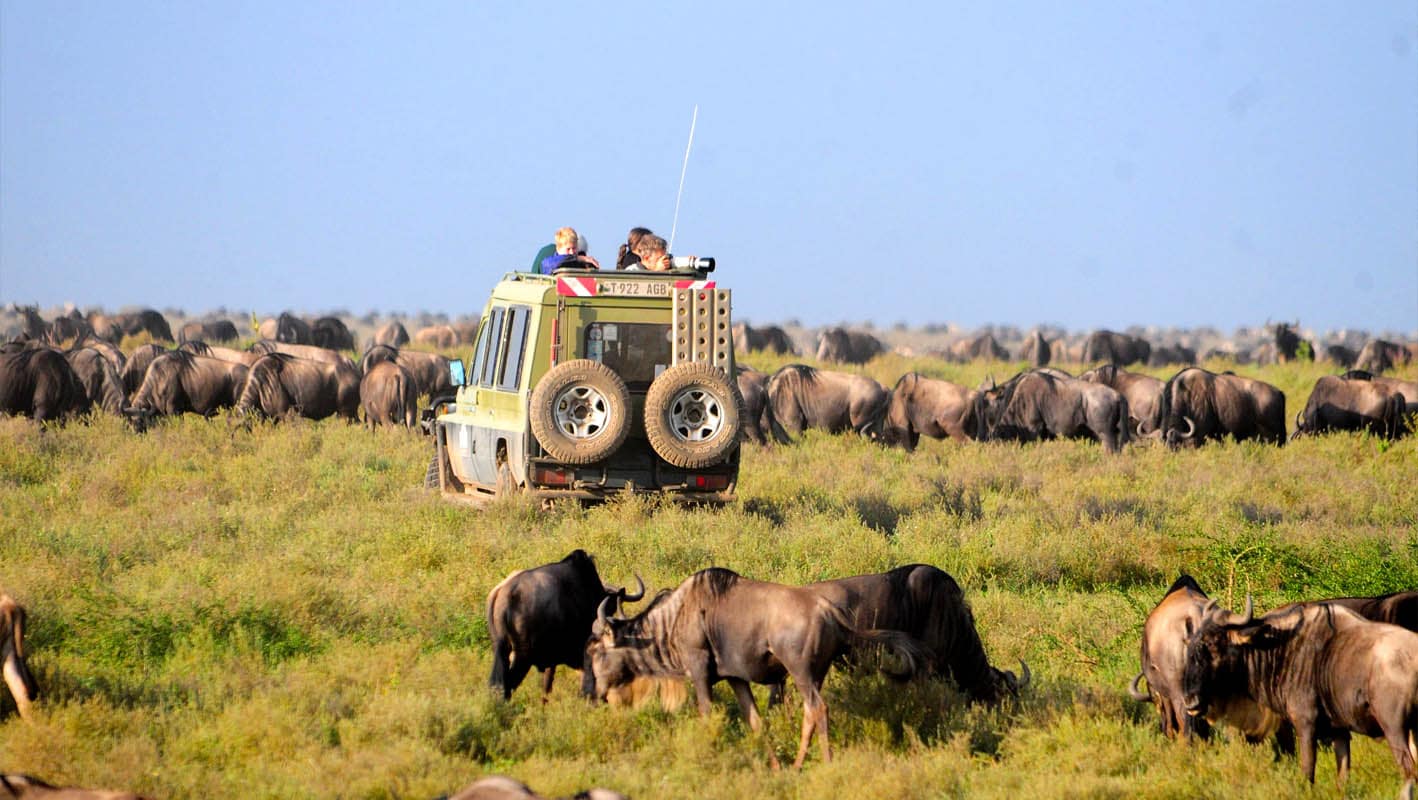
The open Serengeti plains support the world's most famous grassland birds, including the extraordinary secretary bird, lappet-faced vulture, martial eagle, bateleur, and a remarkable diversity of raptors. The kopje outcrops support breeding colonies of verreaux's eagles, and the riparian zones along Serengeti rivers host kingfishers, herons, and bee-eaters. Our Photographic Safari Experience in the Serengeti devotes significant attention to bird photography.
The crater's concentrated wildlife ecosystem attracts both water birds and raptors in extraordinary numbers. Flamingo flocks on Lake Magadi, martial eagles riding thermals above the crater walls, and dense concentrations of oxpeckers on the large mammal herds make Ngorongoro an excellent birding destination.
The montane forest and crater lakes of Arusha National Park support over 400 species including the stunning silvery-cheeked hornbill, crowned hornbill, Eastern mountain greenbul, and multiple species of sunbird and robin-chat. The Momella Lakes are extraordinary for waterfowl and waders. Our Arusha day trip includes dedicated birding time at the lakes.
The forests of Kilimanjaro's lower slopes are home to Abbott's starling, the Kilimanjaro white-eye, Hartlaub's turaco, and numerous forest specialists. The moorland zone above the forest hosts the striking scarlet-tufted sunbird and the moorland chat — both near-endemic species with strong associations with the mountain.
Tanzania's eastern mountain arc forests are globally significant for endemic bird species. Key Tanzania endemic and near-endemic species include:
Tanzania offers excellent birdwatching year-round, but two periods stand out:
Our guides include experienced birders who can supplement standard game drive narratives with detailed bird identification, behavioral observation, and photography guidance. A dedicated birding safari can be designed around Tanzania's key hotspots, combining Northern Circuit parks with the Eastern Arc Mountain forests for a truly comprehensive Tanzania birding experience.
Contact Serengeti Wild Tours to design your Tanzania birdwatching safari. Whether birds are your primary focus or a wonderful complement to your wildlife safari, we will ensure Tanzania's extraordinary avian diversity is a central part of your experience.
Let us help you plan a safari or climb that feels effortless, authentic, and unforgettable.
Call Us
Email Us
Copyright © Serengeti Wild Tours | All Rights Reserved
