Call Us
Few places on Earth can match the sheer concentrated wildlife spectacle of the Ngorongoro Crater. Descending into this ancient volcanic caldera — the world's largest intact volcanic caldera — feels like stepping onto a natural stage where lions, elephants, black rhinos, and flamingos share a 260 square kilometre theatre. This complete Ngorongoro Crater safari guide covers everything you need to plan an unforgettable visit.
The Ngorongoro Crater is one of the anchor destinations on all of our Tanzania Lodge Safari itineraries, and for very good reason — no other single destination in Africa offers such reliable, diverse, and dramatic wildlife sightings in such a compact area.
The Ngorongoro Crater is a UNESCO World Heritage Site and one of Africa's most celebrated natural wonders. It was formed approximately two to three million years ago when a massive volcano collapsed inward, creating a caldera roughly 19 kilometers wide and 600 meters deep. Today, the crater floor covers about 260 square kilometers and is home to a permanent population of around 25,000 large animals.
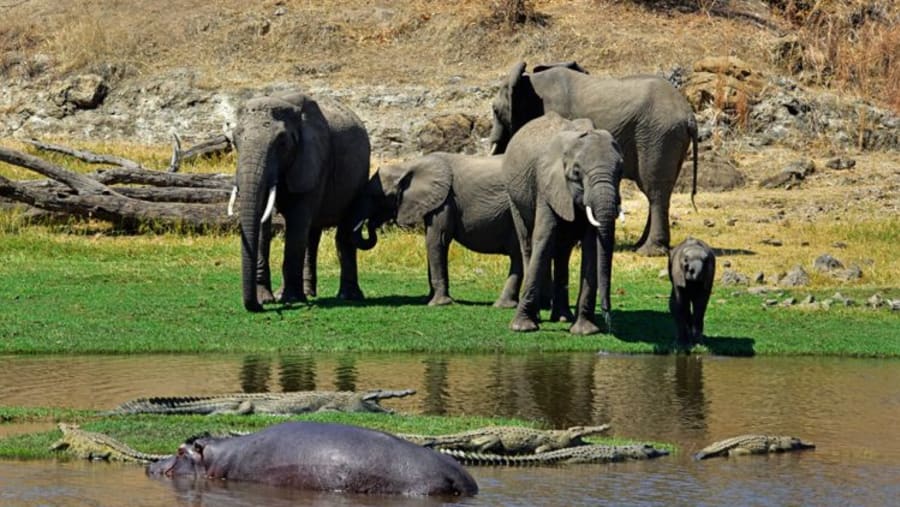
Unlike national parks where animals migrate freely, the Ngorongoro Crater's high walls create a natural enclosure that traps year-round populations of wildlife within its bowl. This is why sightings are so reliable — lions, elephants, Cape buffalo, hippos, hyenas, and the highly endangered black rhinoceros can all be seen on a single game drive.
The Ngorongoro Crater is one of the few places in East Africa where you have a genuine chance of seeing all of the Big Five — lion, elephant, leopard, buffalo, and black rhino — in a single day. Here is a breakdown of what to expect:
The crater supports one of the densest lion populations in Africa. Prides can often be found resting in the open grasslands or dragging a fresh kill across the plains. The lions of Ngorongoro are famous for their distinctive dark manes and relaxed behavior around safari vehicles.
Ngorongoro is one of the safest places in Tanzania — and arguably East Africa — to see the critically endangered black rhino. A small but growing population lives on the crater floor, and patient game drives will often result in a sighting of these prehistoric-looking animals.
Large-tusked bull elephants frequently descend into the crater, and herds with young calves can be seen around the crater's forest edges and swamp areas. The crater elephants are known for carrying exceptional tusks, making them a priority sighting for wildlife photographers using our Photographic Safari Experience.
Lake Magadi on the crater floor periodically hosts thousands of lesser and greater flamingos, along with waders, waterfowl, and raptors. The Ngorongoro Crater is a birding paradise with over 500 bird species recorded.
The Ngorongoro Crater has the highest concentration of spotted hyenas anywhere in Africa. Their clan territories and highly social behavior make for fascinating wildlife observation. Contrary to popular belief, hyenas are skilled and intelligent hunters — and in Ngorongoro, they are often the dominant predator over lions.
The Ngorongoro Crater is excellent year-round, but certain months offer distinct advantages. The dry season from June to October brings clear skies and concentrated wildlife around water sources. The wet season from November to May brings green landscapes, incredible birdlife, and significantly fewer visitors.
For the best overall balance of wildlife, weather, and fewer crowds, January to February and June to July are particularly recommended. January–February coincides with the calving season in nearby Ndutu, making it easy to combine a Ngorongoro crater visit with a Southern Serengeti calving safari — a combination we feature in our Great Migration Safari packages.
Safari vehicles descend into the crater via two steep dirt tracks — Seneto Descent Road and Lerai Descent Road — and must exit before sunset. Game drives typically last between four and seven hours, covering the crater floor's varied habitats including open grassland, acacia woodland, the Lerai Forest, Lake Magadi, and the Gorigor Swamp.
A full crater game drive offers a beautifully varied experience. You may begin with lions in the open grassland, move to the swamp for hippos and elephants, scan the open plains for rhinos, and end at the lake for flamingo sightings. Every drive is different, and our experienced guides know the crater's wildlife patterns intimately.
Accommodation ranges from luxury crater-rim lodges to more accessible options outside the conservation area.
Staying on the crater rim offers breathtaking views into the caldera and early morning access before the crowds arrive. Luxury lodges on the rim include some of Tanzania's most iconic properties. If you are interested in this elevated experience, explore our Tanzania Luxury Safari packages, which feature handpicked crater rim properties.
For travelers working with a tighter budget, comfortable lodges and tented camps can be found outside the Ngorongoro Conservation Area, with easy morning access to the crater. Our Tanzania Budget Safari packages offer excellent value without compromising the quality of your game drives.
The Ngorongoro Crater is perfectly positioned as part of a broader Northern Tanzania safari circuit. Most of our itineraries combine Ngorongoro with the Serengeti, Tarangire National Park, and Lake Manyara. You can also combine it with a cultural visit to a Maasai village, which we include in our Cultural Experience offerings. After the safari, many travelers extend their trip with a Zanzibar Holiday Package for the perfect beach and safari combination.
The Ngorongoro Crater should be on every African safari itinerary. Whether you are combining it with the Serengeti for a classic Northern Circuit safari or including it as a standalone day excursion on one of our Tanzania Day Trips, the crater will deliver one of the most remarkable wildlife experiences of your life. Contact Serengeti Wild Tours today to begin planning your perfect Ngorongoro safari.
Let us help you plan a safari or climb that feels effortless, authentic, and unforgettable.
Call Us
Email Us
Copyright © Serengeti Wild Tours | All Rights Reserved
